ANALISIS HADIST TENTANG PERINTAH MENDIDIK ANAK, MENCINTAI NABI, AHLUL BAIT, DAN AL-QUR'AN: KAJIAN SANAD, MATAN, DAN IMPLEMENTASI DALAM PENDIDIKAN ISLAM KONTEMPORER
Abstract
This research examines the hadith narrated by Ad-Dailami from Ali bin Abi Thalib regarding the command to educate children to love Prophet Muhammad SAW, Ahlul Bait, and read the Qur'an. The research objectives are to analyze the quality of the hadith's chain (sanad) and text (matan), explore supporting evidence, and formulate implementation strategies in contemporary Islamic education. This study employs library research methodology with a descriptive-analytical approach, involving hadith criticism analysis, content analysis, and comparative analysis of primary sources including classical hadith books and secondary sources of Islamic educational literature. The findings indicate that this hadith has a very weak chain (dha'if jiddan) due to several problematic narrators such as Makhariq bin Abdurrahman who is unknown (majhul), Shalih bin Abil Aswad who made numerous errors, and Al-Hasan bin Al-Husain who is considered unreliable. However, the hadith's content strongly aligns with Islamic educational principles found in the Qur'an and authentic hadiths, particularly Surah Luqman verses 13-19 and hadiths emphasizing the virtue of teaching moral character. Implementation of these three educational values can be achieved through storytelling methods of prophetic biography (sirah nabawiyah), introducing inspirational figures from Ahlul Bait, and Qur'anic learning using Tilawati, Iqro', An-Nahdliyah, and Tahajji methods adapted to children's psychological development. The research concludes that despite its weak chain, this hadith maintains high relevance as a framework for Muslim children's character education in facing modernity challenges.
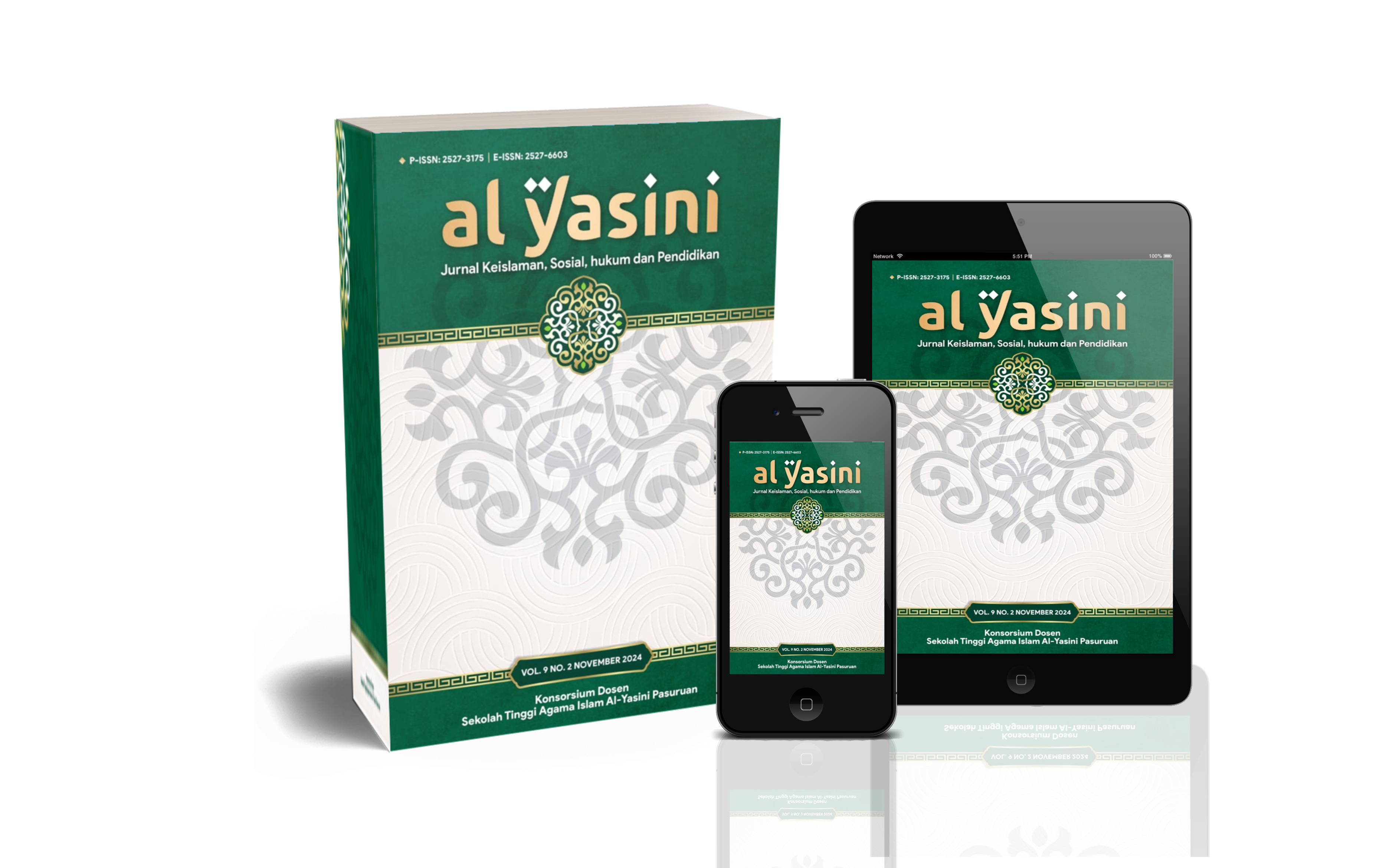
Copyright (c) 2026 Al Yasini : Jurnal Keislaman, Sosial, hukum dan Pendidikan

This work is licensed under a Creative Commons Attribution-NonCommercial-ShareAlike 4.0 International License.

.png)